Ottawa, Canada
Resume
Project 01

HoloTag

A competitive parkour-tag game where players chase, evade, and outmaneuver each other in high-speed arenas, turning movement skill and split-second decisions into victory.

Unreal Engine Blueprint 3D Multiplayer
Scroll ↓
Overview

Fast-paced multiplayer parkour

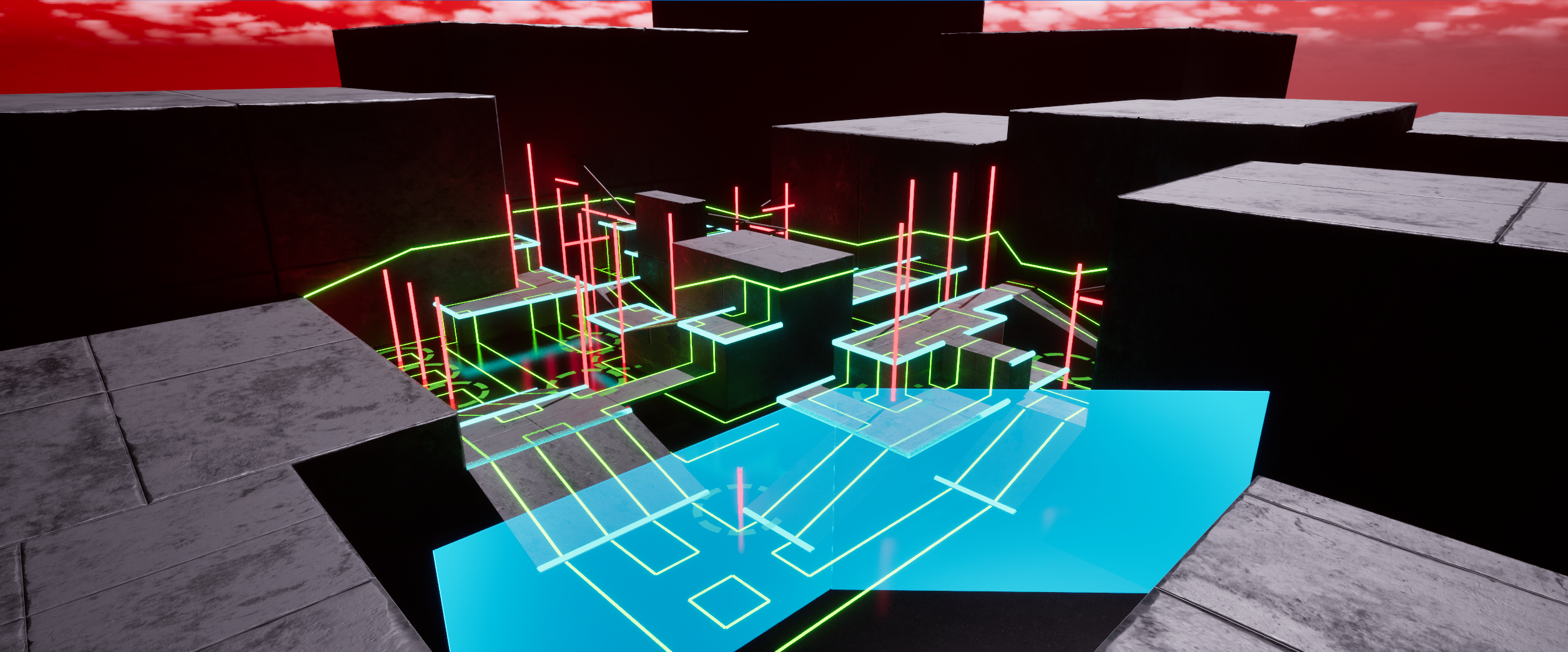
HoloTag reimagines the classic game of tag with fluid parkour mechanics and competitive multiplayer action. Players navigate vertically-designed arenas with wall-running, sliding, and precision jumping while trying to tag opponents or escape from pursuers.

The game emphasizes skill-based movement and strategic arena knowledge, rewarding players who master the momentum-based traversal system. Every match becomes a high-stakes chase where one wrong move can turn hunter into hunted.
Features

Core gameplay systems

🏃

Advanced Movement

Fluid parkour mechanics including wall-running, sliding, mantling, and momentum-based traversal.

🎮

Multiplayer Action

Competitive online matches supporting multiple players in fast-paced tag gameplay.

🏗️

Custom Arenas

Vertically-designed maps optimized for parkour flow and strategic positioning.

Animation System

Custom layered animation blending and state machines for responsive character movement.

🎨

Character Models

Game-ready characters and environmental assets designed and modeled in Blender.

Network Optimization

Smooth multiplayer experience with client-server architecture and lag compensation.

Development

Technical implementation

Built in Unreal Engine 5 using a combination of C++ and Blueprint, HoloTag showcases advanced character movement systems and multiplayer networking. The custom animation system uses layered blending and state machines to seamlessly transition between parkour moves.

The movement system required extensive iteration to find the perfect balance between realism and arcade-style fun. Physics-based momentum calculations ensure fluid, skill-based traversal that rewards mastery.

All character models and environmental assets were created in Blender, then optimized for real-time rendering in Unreal. The art pipeline focused on maintaining consistent visual style while hitting performance targets for multiplayer gameplay.

Network synchronization was a major technical challenge, requiring careful consideration of client prediction, server reconciliation, and interpolation to create smooth gameplay despite network latency.

Engine
Unreal Engine 5
Languages
C++ & Blueprint
3D Modeling
Blender & Maya
Animation
State Machines
Networking
Client-Server
Type
Multiplayer Prototype
Key Achievements

Project milestones

3D
Movement System
Multi
Player Support
Custom
Animations
UE5
Technology